


Mexico Adds 20 New Industrial Parks: Investment, Jobs and Opportunities for International Talent
- Posted by javiadas
- On Tuesday November 24th, 2026
- 0 Comments
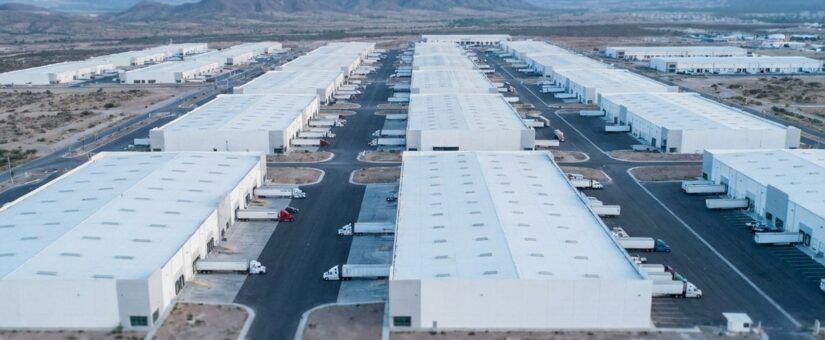
On October 22, President Claudia Sheinbaum stood at the National Palace with the Mexican Association of Private Industrial Parks (AMPIP) and announced 20 new industrial parks. Together they carry US$763 million in initial investment, 4.6 million square meters of space for about 175 companies, and a projection of 32,127 jobs, according to the Presidency.
The announcement matters for a simple reason. These are not plans on paper. AMPIP says all 20 parks already have companies installed and operating. For HR and mobility teams, that means the demand for engineers, plant managers and specialists in these locations is current, not a forecast for 2030.
Where the new parks are
The 20 parks sit in 17 municipalities across Coahuila, Nuevo León, Mexico City, the State of Mexico, Aguascalientes, Guanajuato, Querétaro and Baja California. The Presidency grouped them into four corridors:
- Northern border (Coahuila and Nuevo León): 10 parks, 3.16 million square meters, 75 companies and 26,800 expected jobs.
- AIFA corridor (Mexico City and State of Mexico), around Felipe Ángeles International Airport: 5 parks, 166,000 square meters, 26 companies and 1,727 jobs.
- Bajío (Aguascalientes, Guanajuato and Querétaro): 3 parks, 915,000 square meters, 54 companies and 1,500 jobs.
- Baja California, on the Gulf of California border: 2 parks, 20 companies and 2,100 projected jobs.
The weight falls on the north. The Logistics World calculated that the ten northern border parks hold about 69% of the new space and more than 80% of the expected jobs. Nuevo León and Coahuila are once again where most of the new manufacturing capacity will land.
AMPIP and the Ministry of Economy named five target sectors for the association’s 2026 investment plan: auto parts, medical devices, aerospace, industrial machinery and electronic equipment. Coverage of this second batch also points to food processing, distribution centers and e-commerce.
Part of a larger plan
The parks count toward a national target. Plan México, the federal development strategy launched in January 2025, aims for 100 new industrial parks during the current administration. The first 20 came online earlier this year. In March, Mexico News Daily reported that 15 developers had delivered them across 10 states, with more than US$711 million in direct investment.
With the October batch, the count reaches 40, or 40% of the goal. Cluster Industrial, citing AMPIP, puts the cumulative figures at more than US$1.4 billion, 26 developers, 14 states, 8.2 million square meters and space for about 420 companies. AMPIP also told the Presidency that its members plan to invest US$4.6 billion in 2026, and The Logistics World reports another 80 parks under construction in 13 states.
AMPIP’s board president, David O’Donnell, framed the parks as infrastructure that connects capital with “workers, suppliers, universities and communities,” as Mexico News Daily reported. That list is a useful reminder. A park is land, power and roads. It only produces once a company fills it with people who know how to run a line.
The trade backdrop
The announcement comes in an uncertain year for North American trade. At the first USMCA joint review on July 1, the United States said it would not support extending the agreement in its current form. Greenberg Traurig explains that this triggers annual reviews. It does not end the treaty, which stays in force until 2036, and current tariff preferences and rules of origin still apply.
The uncertainty has slowed some decisions. In July, CBRE data reported by Mexico Business News showed that several automotive projects remained on hold, while technology-linked projects had started to recover. In greater Mexico City, gross industrial demand in the first half of 2026 reached 1.01 million square meters, 59% more than a year earlier. Vacancy rose to 5.1%.
For companies, the message is mixed but clear. Developers keep building and tenants keep signing. The firms that move now are betting on Mexico’s place in regional supply chains regardless of how the review ends.
The talent question behind the jobs
New plants create jobs for Mexican workers first. Most of the 32,127 positions will be filled locally. But every new operation also needs a small group of people who can launch it: plant directors, quality and process engineers, maintenance specialists, finance controllers and trainers who bring the parent company’s systems. These are often international assignees, at least during the first one to three years.
Finding those skills locally is hard. ManpowerGroup’s 2026 Talent Shortage Survey found that 67% of employers in Mexico struggle to find the people they need, as Publimetro reported in March. In automotive, the figure reached 81%. The same survey found that AI skills have overtaken engineering and traditional IT as the hardest profiles to hire.
At the same time, hiring plans are strong. ManpowerGroup’s outlook for October to December 2026 showed a net employment outlook of 41% in Mexico, with automotive at 53% and the Northeast, home to Nuevo León and Coahuila, leading all regions at 49%, according to Expansión. When local demand runs this high, companies often bridge the gap with expatriates, short-term assignments and regional transfers from Texas, Asia or Europe.
What mobility teams should plan for
A new park on the edge of a northern city or a logistics hub near AIFA is a different assignment from a corporate post in Polanco. Teams preparing moves into these corridors should think about four points early.
Immigration lead times. A company that wants to hire foreign staff in Mexico must first hold an employer registration certificate (Constancia de Inscripción de Empleador) from the National Migration Institute (INM), filed at the office that matches its tax address. Only then can it request a work visa through a job offer. New subsidiaries in a park often start this process from zero, so it belongs in the project plan, not the week before the start date.
Housing near the plant. Many parks sit on the edge of metro areas. Commute times, security and the quality of rental stock vary a lot between neighborhoods, and new supply can be tight when several companies arrive at once.
Schools and family support. Bilingual and international schools concentrate in specific zones of Monterrey, Saltillo, Querétaro and Mexico City. Waiting lists matter for assignees with children, and a family that does not settle is the most common reason an assignment ends early.
Settling in. Bank accounts, tax ID, driver’s licenses, health coverage and the first weeks of daily life take time away from the job. Good support here shortens the path to productivity for the people who are supposed to start up the plant.
Looking ahead
Forty parks in, Plan México has 60 to go, and AMPIP members are already building more. Each new delivery will bring another wave of companies that need to move people into Mexico on a deadline. The firms that plan immigration, housing, schooling and settling-in support alongside the construction schedule will have their teams ready when the doors open. SRS works with HR and mobility teams on each of those steps, from employer registration to the first weeks in a new city.
Sources
- Presidenta anuncia 20 parques industriales de la AMPIP con inversión de 763 mdd y creación de 32 mil 127 empleos; se cumple 40% de la meta. Presidencia de la República (gob.mx), 2026-10-22
- 20 new industrial parks delivered, bringing to 40 the total under Sheinbaum’s Plan México. Mexico News Daily, 2026-10-23
- AMPIP suma 40 parques industriales al Plan México con inversión de 1,400 mdd. Cluster Industrial, 2026-10-22
- AMPIP suma 40 parques industriales al Plan México; la frontera norte concentra la nueva capacidad. The Logistics World, 2026-10-22
- First 20 industrial parks under Plan México open for business. Mexico News Daily, 2026-03-10
- USMCA Joint Review Triggers Annual Reviews but Does Not Alter Current Trade Benefits. Greenberg Traurig, 2026-07-13
- USMCA Uncertainty Reshapes Industrial Demand: CBRE. Mexico Business News, 2026-07-13
- Histórico: la IA desplaza a la ingeniería como talento más escaso. Publimetro México, 2026-03-02
- ¿Planeas cambiar de trabajo este año? Estos son los sectores que contratarán más en lo que queda de 2026. Expansión, 2026-09-08
- Obtención de Constancia de Inscripción de Empleador (infografía). Instituto Nacional de Migración (gob.mx)

0 Comments