


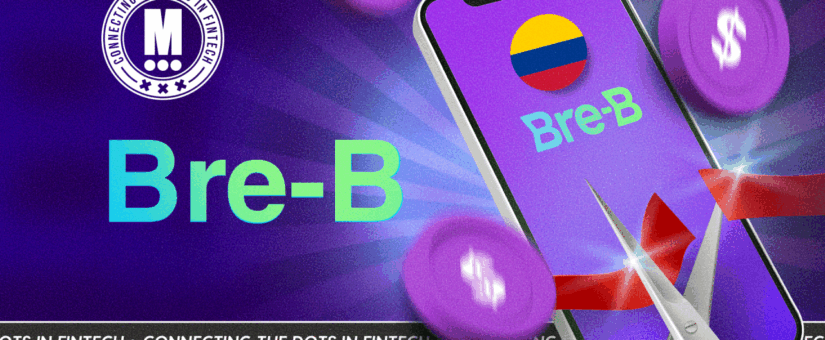
Colombia Bets Big on Instant Payments With Central Bank’s BRE-B
- Posted by Colombia
- On Tuesday August 12th, 2025
- 0 Comments
In a country where 8 out of 10 daily transactions are still conducted in cash, Colombia is making a bold move to usher in the era of real-time digital payments. With the official launch in September of BRE-B – a centralized, free-to-use platform backed by the Central Bank – Colombia is aiming to unify its fragmented financial ecosystem and increase financial inclusion across urban and rural regions.
The Banco de la República Electronica, or BRE-B, is the country’s most ambitious monetary innovation to date, and equivalent of Brazil’s widely lauded Pix platform. The system is designed to allow Colombians to instantly send and receive money across banks, mobile wallets, and fintech services, without transaction fees, regardless of the platform or financial institution.
“We’re not building from scratch like Brazil did with Pix,” stated Ana María Prieto, director of payment systems at Banco de la República, to Bloomberg. Prieto, who has led the two-year development of the platform believes success depends on “connecting what already exists – and making it work better for everyone.”
While Pix now processes more than a third of Brazil’s digital payments and has over 160 million users, Colombia’s financial system remains more fragmented. Major banks such as Bancolombia and Davivienda already operate popular digital wallets – Nequi and Daviplata – but nearly 80% of transactions between digital accounts in Colombia take place within the same institution. This closed-loop model has constrained competition and imposed high costs on consumers not affiliated with these outlets.
In many cases, transferring money between banks incurs a fee of up to COP$7,980 pesos (around US$2), a barrier that disproportionately affects low-income users. With BRE-B, interbank transfers are free, and participating institutions can define their own daily transaction limits for users.
“The whole low-value payment system in Colombia was lagging behind,” said Mauricio Villamizar, co-director of the central bank. “We’re trying to be disruptive. Yes, some banks have pushed back because they’re losing market power and fee income – but we’re OK with that.”
“Keys” to Financial Inclusion
A key feature of the BRE-B system is the use of “llaves” – a set of digital identifiers that link a user to their financial account, allowing others to send them money without needing to know full account details. Colombians as from July 14 can start choosing from four types of “keys”:
- A mobile phone number
- The national ID number (cédula)
- An email address
- A custom alphanumeric code generated by a financial institution
So far, more than 13 million Colombians have signed up for a llave through pilot programs run by private banks. The widespread adoption of these identifiers is expected to streamline peer-to-peer transactions and increase digital trust.
The technology is also supported by Redeban, Colombia’s main payment processor, which has partnered with the Central Bank to ensure secure, fast processing across platforms.
Before BRE-B, transferring funds between institutions often required waiting at least a full business day – especially if the transaction was made after 3 p.m. Now, funds arrive within seconds, regardless of the time of day or the platform used.
“What changes with BRE-B is immediacy,” said Santiago Matamoros, director of product and design at Nu Colombia, the local arm of global fintech Nubank. “At Nu, we design everything around the customer – testing features based on age, location, and needs. Our job is to ensure the customer clearly understands every step when using BRE-B.”
Matamoros also highlighted the security assurances behind the platform. “This is a system backed by Banco de la República and Redeban. It’s not a patchwork solution by one bank, but a collaborative effort by all financial entities. We’ve learned a lot from Pix in Brazil and have incorporated those lessons here.”

0 Comments